
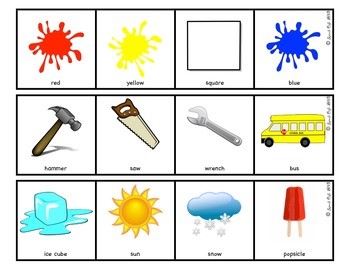
When children are young, they may be asked to look at a list or a set of objects and identify which one doesn’t belong.
In Scripture, we find lists but typically everything seems to fit. Genesis 1 lists what God created. Exodus 20 has the ten commandments. In the New Testament (Romans 12 and 1 Corinthians 12), we find lists of the gifts of the Holy Spirit and in Galatians 5, the fruit of the Spirit.
Recently I was stumped when I came across a list in 2 Peter 1:5-7. It says, “For this very reason, make every effort to add to your faith goodness; and to goodness, knowledge; and to knowledge, self-control; and to self-control, perseverance; and to perseverance, godliness; and to godliness, brotherly kindness; and to brotherly kindness, love.”
Did you find anything odd or seemingly out of place? Perhaps not. In this list of virtues that lead to a fruitful Christian life, I was surprised that knowledge was included. The rest seemed a reasonable fit into the category of qualities or character traits.
But why was knowledge included in this list of virtues? According to the NKJV Study Bible, knowledge, in this verse, is referring to “practical wisdom.” We gain this practical wisdom by learning God’s truth in Scripture and applying it to our lives. For that to happen, we need to invest time and effort, read and study God’s Word, and listen to Bible teachers/preachers.
Finally, Peter instructs us to “possess these qualities in increasing measure” (2 Peter 1:8). May we continue to grow in our knowledge of Scripture and strive to put it into action.


 Pointing the Way ~ by Arrow